
Approaching High-Variance Slot Mechanics: A Perspective on Volatility
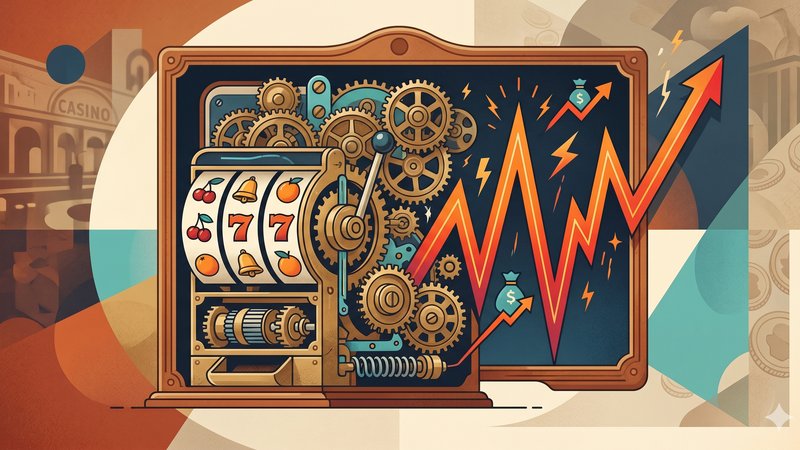
For the seasoned enthusiast, the mechanical slot is more than just a game; it is a study in probability and physics. When we discuss "high variance" in the context of these machines, we are referring to the mathematical distribution of payouts. In our opinion, understanding this distribution is the first step toward a more informed gaming experience.
What Does High Variance Actually Mean?
In simple terms, high variance (or high volatility) means that the game is designed to pay out less frequently, but when it does pay, the amounts may be significantly larger. This is the opposite of low-variance games, which provide frequent, smaller wins that keep the balance steady.
Based on our review of various mechanical simulations, high-variance slots often employ a "top-heavy" paytable. This means a large portion of the Return to Player (RTP) percentage is tied up in the rarest combinations.
Disclaimer: It is crucial to note that there is no winning strategy for slots. The outcome of every spin is determined by a Random Number Generator (RNG), and no specific pattern or timing can change the mathematical house edge.
Because of the inherent unpredictability of these games, we emphasize the importance of responsible gambling. Please play within your limits and never wager more than you can afford to lose.
Bankroll Management for High-Volatility Play
Experienced players often adjust their betting patterns to accommodate the swings associated with high variance. According to our methodology, a "conservative" approach to high-volatility slots involves a larger starting bankroll relative to the bet size.
- The Buffer Method: Maintaining a balance that allows for 200-500 spins without a significant win.
- Unit Betting: Betting a small, fixed percentage of the total bankroll (e.g., 0.1% to 0.5% per spin).
- Loss Limits: Setting a hard stop-loss point to prevent chasing losses during a dry spell.
The Psychology of the 'Near Miss'
Mechanical slots are famous for the "near miss"—where the winning symbol lands just one stop above or below the payline. In our opinion, this is a key part of the mechanical appeal, but it can also be misleading. Mathematically, a near miss is no closer to a win than a complete miss.
Understanding this helps the experienced player remain detached from the emotional swings of the game. The goal is to enjoy the mechanical aesthetic and the thrill of the potential payout without falling into the trap of believing the machine is "due" for a win.
Comparing Variance Levels
To help illustrate the difference, consider how different variance levels may behave over a 1,000-spin session:
- Low Variance: The balance likely fluctuates in a narrow range. You may end the session close to your starting amount.
- Medium Variance: Occasional spikes in balance with moderate dips.
- High Variance: The balance may drop significantly for long periods, followed by a sudden, large spike that could potentially put the player in profit.
Ultimately, high-variance slots are designed for those who prefer the excitement of a high-risk, high-reward profile. While they may offer the possibility of larger wins, they also carry the risk of faster balance depletion. We recommend using tools provided by regulators and organizations like GamCare or BeGambleAware to maintain a healthy relationship with gaming.
Whether you are exploring vintage restorations or digital recreations, the core principle remains: the house always has a mathematical advantage. Play for the experience, the art, and the thrill, but always keep your feet firmly planted in the reality of the odds.